- Pitta Vata
- Pitta Vata Skincare
Pitta Vata Skincare

PITTA VATA SKIN
Modern skincare science understands how blood circulates through arteries, veins, and capillaries, while Ayurveda describes an intricate network of Srotamsi (channels) responsible for the movement of nutrients, energy, and life itself.
Applying these perspectives to facial skin care provides a holistic understanding of skin health and beauty.
In our facial skin’s circulatory system, blood vessels gradually divide into minute, hair-like channels called capillaries.
Their thin walls permit the exchange of oxygen, nutrients, hormones, and other essential substances with surrounding tissues while maintaining the delicate internal/external epidermal balance.
Ayurveda describes comparable microscopic channels: subtle pathways through which nourishment, vitality, and life-supporting substances reach every cell. These minute channels symbolize not merely physical conduits but also the skin’s ability to sustain harmony throughout all levels of exposure.
Within the facial capillary network, oxygen and nutrients are distributed according to each tissue's needs. Heat generation, metabolic exchange, and cellular nourishment occur continuously within these microscopic vessels. This sums up the dynamics of Vata + Pitta: Circulation, oxygenation, heat generation and nourishment.
When these facial channels remain open, unobstructed and balanced, skin health flourishes.
When they become impaired, visible imbalances begins to develop.
The harmony within the smallest channels determines the harmony of the entire face.
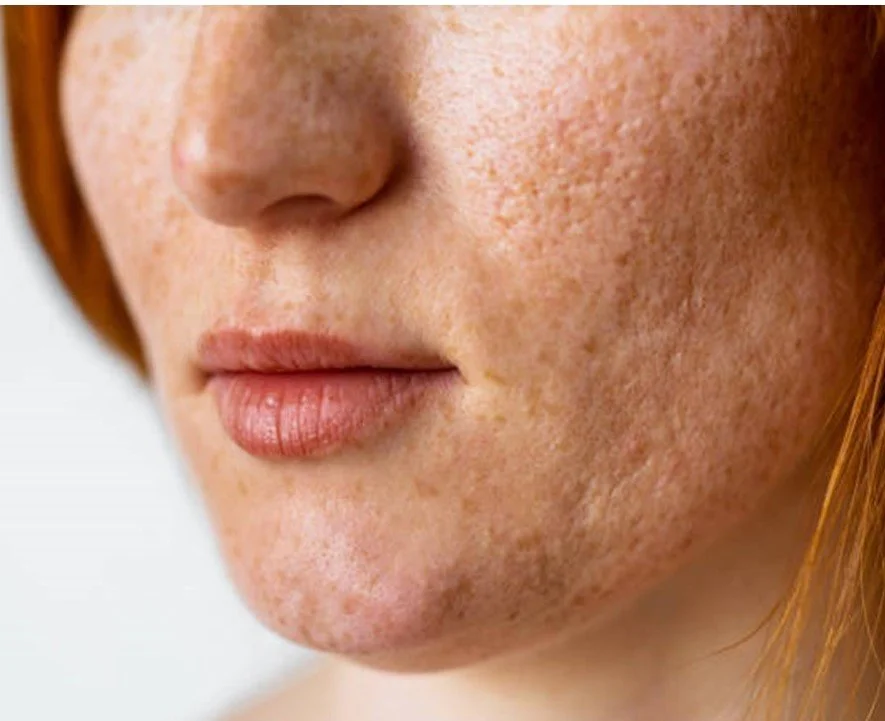
When facial capillaries fail to function efficiently because of inflammation, impaired circulation, or metabolic disturbances, tissues may suffer from inadequate oxygenation and nutrition and the foundation of dermal health is weakened.
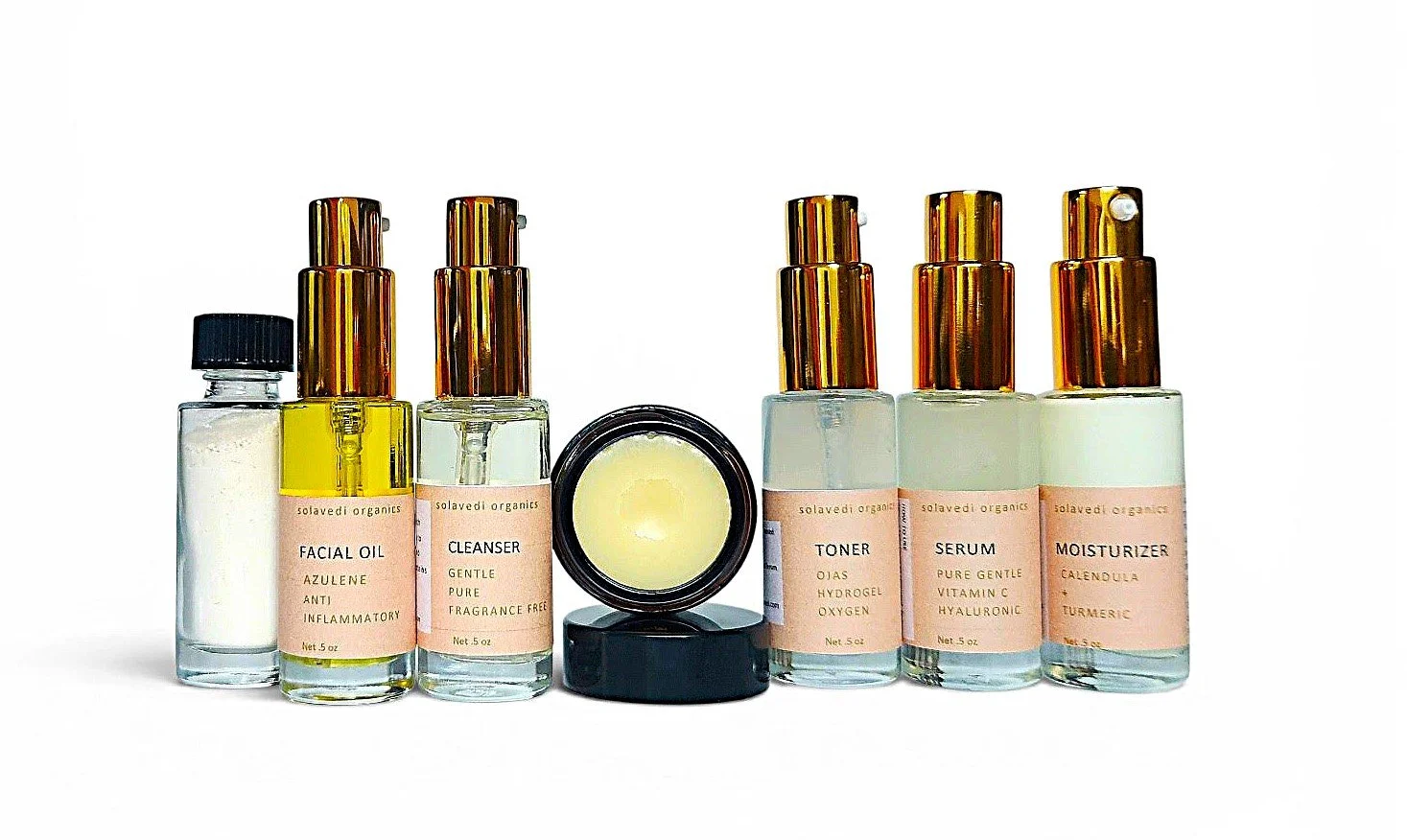
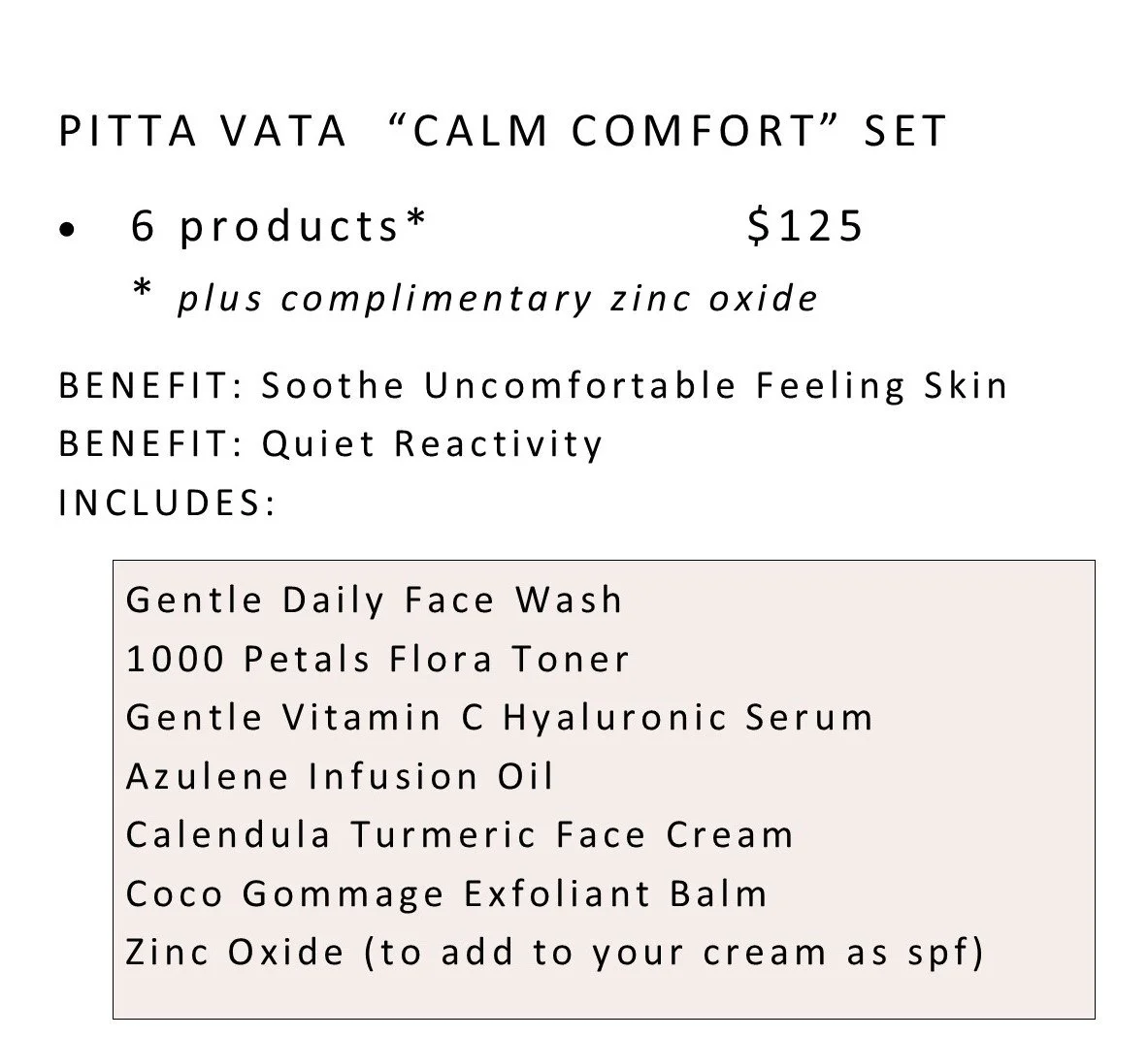
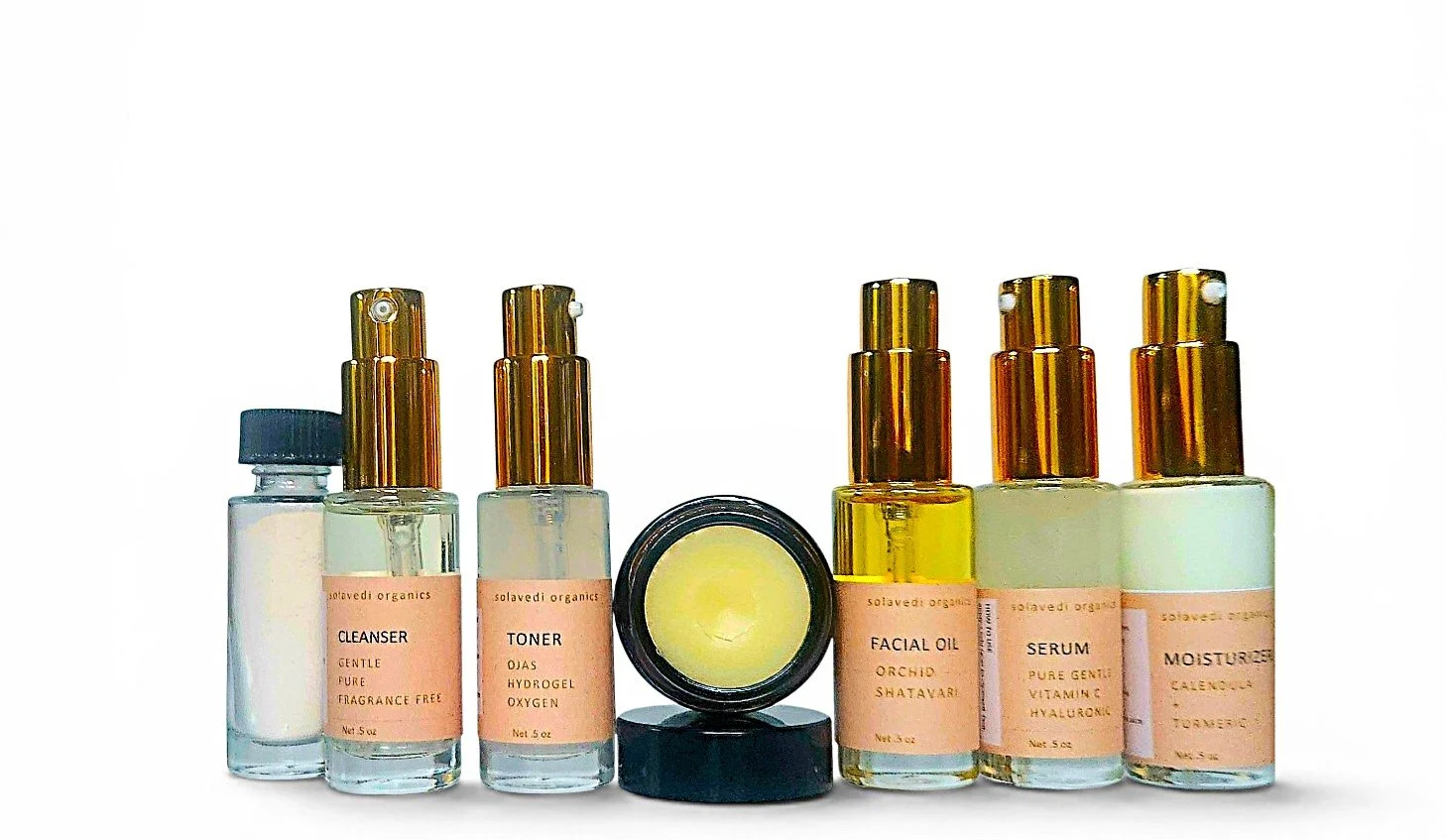
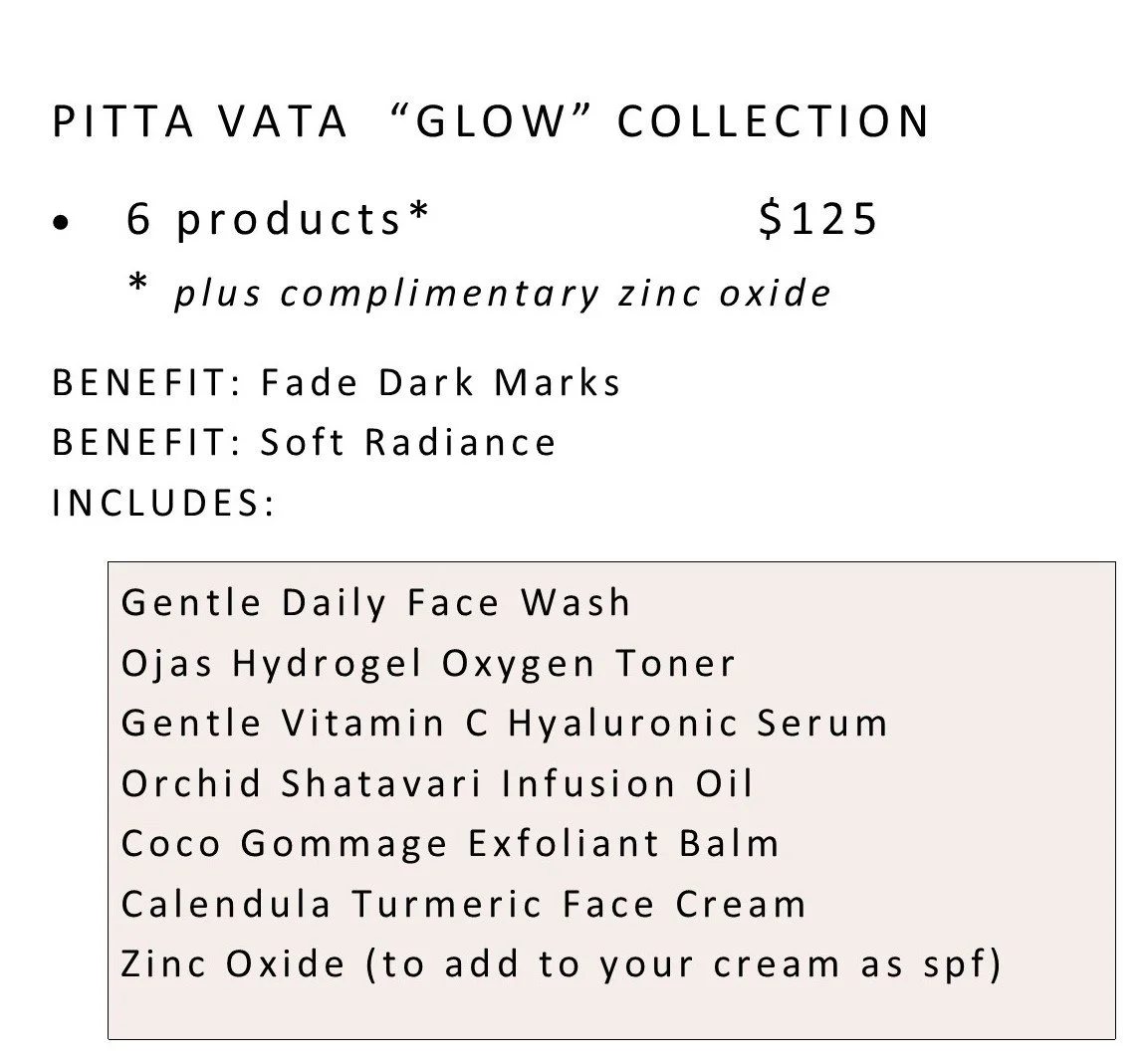
Our topical formulations for PITTA VATA skin work to provide nourishment, calm inflammation, and be light enough to be “breathable” and maintain unobstructed flow in all channels. A buffered, sun-safe Vitamin C serum is included in these collections, for it’s capacity to support capillary resilience.


CURATED BY DR NINA FINE
I'm Dr. Nina Fine, a Certified Ayurvedic Holistic Doctor and Licensed Esthetician (not a medical doctor).
Ayurveda offers us a beautiful way to know ourselves, our bodies and our skin, as a unique blend of three natural, elemental qualities — dry and airy, hot and reactive, rich and oily.
Your skin is a unique mix of these natural elements.
I am available for private consultation, to help you discover your particular skin dosha combination.
Each of these skincare collections are artfully tailored toall of the nuances of complex skin. Never a 1 Size Fits all!
I'm so honored to co - create these skincare collections with Carollanne and Solavedi Organics.
It is very important to me that the products I work with and guide my cherished friends and clients to work with at home, be fresh, potent, effective and pure — because what we put on our skin must be safe enough to put inside our body.
Beautiful skin is never only about what we put on it — it's also shaped by what we eat and how we live.
Want to care for your skin from every angle — your food choices, your lifestyle, and the right ritual for you?
Contact me to explore booking a consultation with me — I'd love to help.
Yours in health and beauty,
Nina Fine
Ayurvedic Doctor, Licensed Esthetician.
https://ayurvedicskin.care/about
339-208-1788
COMPANY INFORMATION
Solavedi Organics Skincare products are made fresh, in small batches, by hand, by Licensed Esthetician, Ayurvedic Practitioner and Ayurvedic Herbal Cosmetics Formulist Carollanne Crichton in rural Monroe, Maine USA (mid Coast).
We are passionate about sharing the education behind each protocol and ingredient.
Whether you are an individual or an esthetician, we are here to help you learn about the many Ayurvedic constitutional expressive personalities, both in harmony as well as under stress - so that you can resolve any ongoing concerns
Expected shelf life of the skincare collections is between 18 and 24 months from when you receive it from us and is clearly marked on the product label.
The Dosha Skincare Collections are intended to be small trials of each designated protocol so that you can see how it works with your skin. Also, each protocol collection of 6 - 7 products is in small, but ample enough sizes to facilitate a noticeable shift in your current condition (Each .5 ounce bottle with daily use, typically lasts 2 - 3 weeks) . We envision you phasing out of 1 protocol and into another in some cases.
The other great thing about trying the small size first is that it allows you to buy the full size of only those products you are certain work well for you.
ABOUT THE FORMULAS
These products are non ge (genetically engineered), are gluten free + soy free, made with oils that are extracted without hexane, are dairy free (except for the Rokk + Blom Clay. It has powdered goat’s milk) and made with raw, unrefined oils and raw, unfiltered New England Honey.
Additionally, all of our facial care products are made with triple infused botanicals in food grade oils rather than essential oils. We make our oils following Ayurvedic medicinal oil making methods.
No essential oils are used in these facial products.
SUSTAINABILITY MATTERS
All products are packaged in glass.
Kindly recycle or reuse.
(We have reduced our plastic usage to lower than 8%)
Label Inks are compostable, made from Algae.
Dyes are not permanent or 100% waterproof forever.
Maine Maker’s Pledge: We source very local, very fresh ingredients as often as possible. Some ingredients are also wildcrafted. It is for this reason we are not a certified organic company.
Your satisfaction is guaranteed.If you need assistance or have questions about a product, feel free to contact carollanne.solavedi@gmail.com